

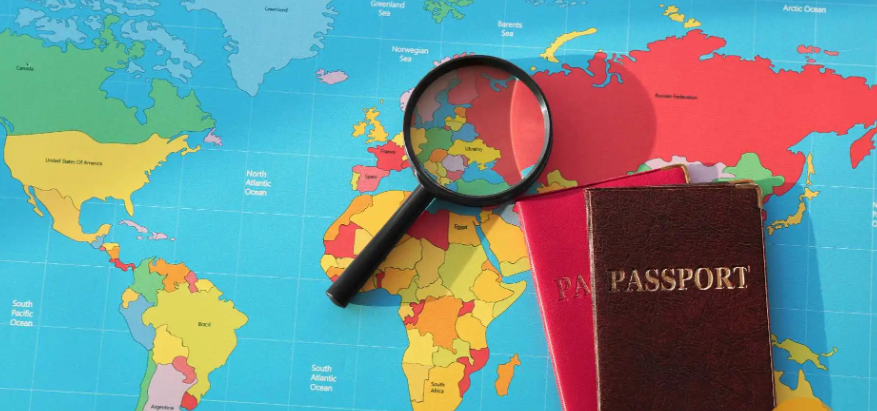
Indians are one of the most enthusiastic people when it comes to travel. In today’s interconnected world, ability to travel aboard freely for leisure or for work is a reasonable and essential call. This privilege of being able to travel freely depends on the strength of a passport.
To understand the strength of Indian passport, let us have a look at the Henley Passport Index. This index ranks the world’s passports based on the number of destinations their holders can access without a prior visa. It uses data from the International Air Transport Association (IATA) and reflects global mobility, showing which passports offer the most travel freedom and which are more restricted.
Its official website ranks India 79th where Indians can visit 58 countries visa free. These countries include Asian countries namely, Bhutan, Nepal, Thailand, Indonesia, Malaysia, Singapore, Sri Lanka, Hong Kong, Macau (SAR China), Kazakhstan, Oman, Iran, Jordan, Palestinian Territories, Kuwait, Qatar, Myanmar, Timor-Leste, Laos, Mongolia, Maldives, Malawi, Seychelles, Tajikistan, Uzbekistan, Turkmenistan.
The list also includes African countries namely, Mauritius, Senegal, Seychelles, Gambia, Mozambique, Angola, Tanzania, Zimbabwe, Rwanda, Burundi, Cape Verde Islands, Comoros Islands, Djibouti, Ethiopia, Guinea-Bissau, Haiti, Jamaica, Trinidad and Tobago, Saint Kitts and Nevis, Saint Lucia, Saint Vincent and the Grenadines, Montserrat, British Virgin Islands, Grenada, Dominica, El Salvador, Barbados, Fiji, Kiribati, Micronesia, Palau Islands, Samoa, Vanuatu, Niue, Cook Islands and Trinidad and Tobago. While these countries offer visa-free access, some may require an Electronic Travel Authorization (ETA) or e-Visa for entry.
Countries like Singapore, Japan, and Germany lead the index, offering visa-free access to over 190 destinations are the top ranking countries of the list. Meaning, passport holders of such countries have an easy access to global destinations. As of 2025, the Indian passport holds a mid-tier global ranking, reflecting a moderate level of travel freedom for its holders.
While the Indian passport does not rank among the world’s strongest, it provides moderate travel freedom and is improving over time. Continued diplomatic efforts and international agreements are likely to enhance its strength in the future.
Visa waivers are often extended to countries with strong economies because they are less likely to create issues like overstays, illegal immigration, or asylum requests. India, while a major economy, is still classified as developing and has a large income disparity. This makes wealthier countries cautious. Countries often grant visa-free travel based on mutual agreements.
