

Armed forces have dominated politics under the guise of reform in several nations around the world. The long-term consequence in each case has been political fragility and delayed democratic development. Pakistan is not the only example where military coups have set back constitutional governance and led to cycles of instability.
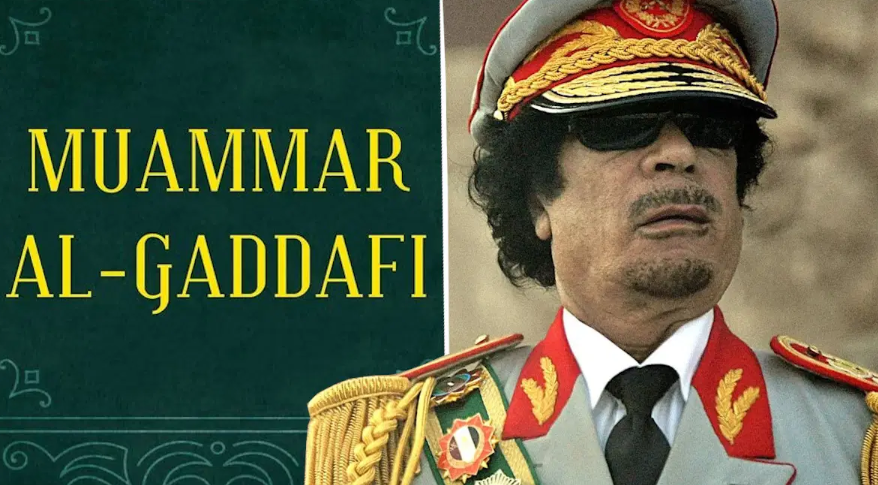
Libya holds a significant place in the list of nations who have struggled with building strong democratic institutions due to military interventions. Just like Pakistan, the military ruler of Libya, Muammar Gaddafi, initailly claimed that his coup was necessary to restore stability, eliminate corruption, and protect national sovereignty.
Who was Muammar Gaddafi?
Muammar Gaddafi was born in 1942 in a Bedouin tent near Sirte, Libya. He rose from humble beginnings to become one of the most controversial leaders of the 20th century.
A military officer turned revolutionary, Gaddafi seized power in 1969 through a bloodless coup that overthrew King Idris I. He quickly established the Libyan Arab Republic and began reshaping the country based on his ideological vision outlined in his “Green Book” — a blend of socialism, Arab nationalism, and Islamic values.
Gaddafi’s early years in power were marked by ambitious reforms. He nationalized the oil industry, using the revenue to improve education, healthcare, and infrastructure. Libya saw significant increases in literacy and life expectancy under his rule. However, his leadership soon became increasingly autocratic. Political dissent was brutally suppressed, and opposition was met with imprisonment, torture, or execution.
Internationally, Gaddafi was known for his erratic behavior and support for militant groups, earning him widespread condemnation. Libya was implicated in several terrorist attacks during the 1980s, including the bombing of Pan Am Flight 103 over Lockerbie, Scotland. These actions led to UN sanctions and international isolation for Libya.
“Mad Dog of the Middle East”: Regan
Former President of the USA, Ronald Reagan famously referred to Muammar Gaddafi as the “mad dog of the Middle East” in 1986 due to Gaddafi’s erratic behavior and Libya’s involvement in international terrorism. At the time, Gaddafi was seen as a destabilizing force, openly supporting militant groups and sponsoring acts of terror across the globe.
One of the key incidents leading to Reagan’s remark was the 1986 Berlin discotheque bombing, which killed two American soldiers and injured dozens more. The U.S. government directly linked the attack to Libyan intelligence. In response, Reagan ordered airstrikes on Libya in a mission called Operation El Dorado Canyon, targeting key military sites in Tripoli and Benghazi.
Reagan’s characterization of Gaddafi as a “mad dog” reflected growing frustration in the West over Gaddafi’s unpredictability and his use of oil wealth to fund violent groups, including those involved in Palestinian and African insurgencies. The label also served to isolate Gaddafi diplomatically and justify U.S. retaliatory actions.
In the 2000s, however, Gaddafi made efforts to rejoin the international community. He renounced weapons of mass destruction, paid compensation for past terror attacks, and improved diplomatic ties with Western nations. For a time, Libya appeared to be on a path toward normalization.
End of the Rule
This period of relative stability ended with the 2011 Arab Spring. Inspired by uprisings across the Arab world, Libyans began protesting against Gaddafi’s 42-year rule. His violent crackdown on demonstrators triggered a civil war. NATO intervened militarily in support of the rebels, and after months of conflict, Gaddafi was captured and killed in October 2011 in his hometown of Sirte.
Gaddafi’s death marked the end of his regime, but not the instability he left behind. Libya has since struggled with ongoing conflict, political fragmentation, and a power vacuum that multiple factions have sought to fill.
Muammar Gaddafi remains a deeply polarizing figure. To some, he was a visionary who sought to elevate Libya and challenge Western dominance. To others, he was a tyrant who ruled through fear and repression. His legacy continues to shape Libyan politics and its place in the world today.
